Best Laptop Stands for Lenovo Legion Pro 7 Rear Hump
Senior Hardware Diagnostics Specialist & Lead Thermal Editor at Laptop Post Testing Lab · CompTIA A+, ACMT, B.S. in Computer Engineering · 12+ years bench-testing laptop thermal solutions & motherboard repairs
When you start searching for how to choose laptop stand for lenovo legion pro 7 rear hump, you quickly realize standard designs often fail. This high-performance machine features a unique rear chassis extension that houses critical port arrays and thermal exhaust vents.
Standard, flat-surface stands typically collide with this rear protrusion, causing instability. As of 2026, finding a compatible support requires focusing on rear-clearance mechanics and weight-bearing capacity. These units are heavy, often exceeding 2.5kg, so structural integrity is just as vital as fitment.
Quick Answer
Choose a laptop stand with an open rear frame.
Ensure the rear crossbar sits below the exhaust hump.
Look for deep front hooks to secure the chassis.
Verify the material can support high-performance gaming laptop weight.
Prioritize stands that leave rear port access fully unobstructed.
The Rear Hump Problem: Why Standard Stands Fail the Legion Pro 7
The Lenovo Legion Pro 7 design prioritizes thermal performance by pushing the port assembly behind the main hinge line. This creates a distinctive rear hump that acts as a physical barrier for almost all generic laptop stands.
Most inexpensive X-frame stands feature a high rear support bar designed for thin Ultrabooks. When you place a Legion Pro 7 on these, the rear exhaust assembly hits the crossbar before the rubber feet can touch the base of the stand. This prevents the laptop from sitting flat.
You are left with a teetering, unstable platform that risks damaging your ports. Furthermore, obstructing these vents can trap hot air against the chassis. This forces the internal fans to work harder and leads to earlier thermal throttling under heavy gaming loads.
Anatomy of the Legion Pro 7: Identifying Clearance Zones
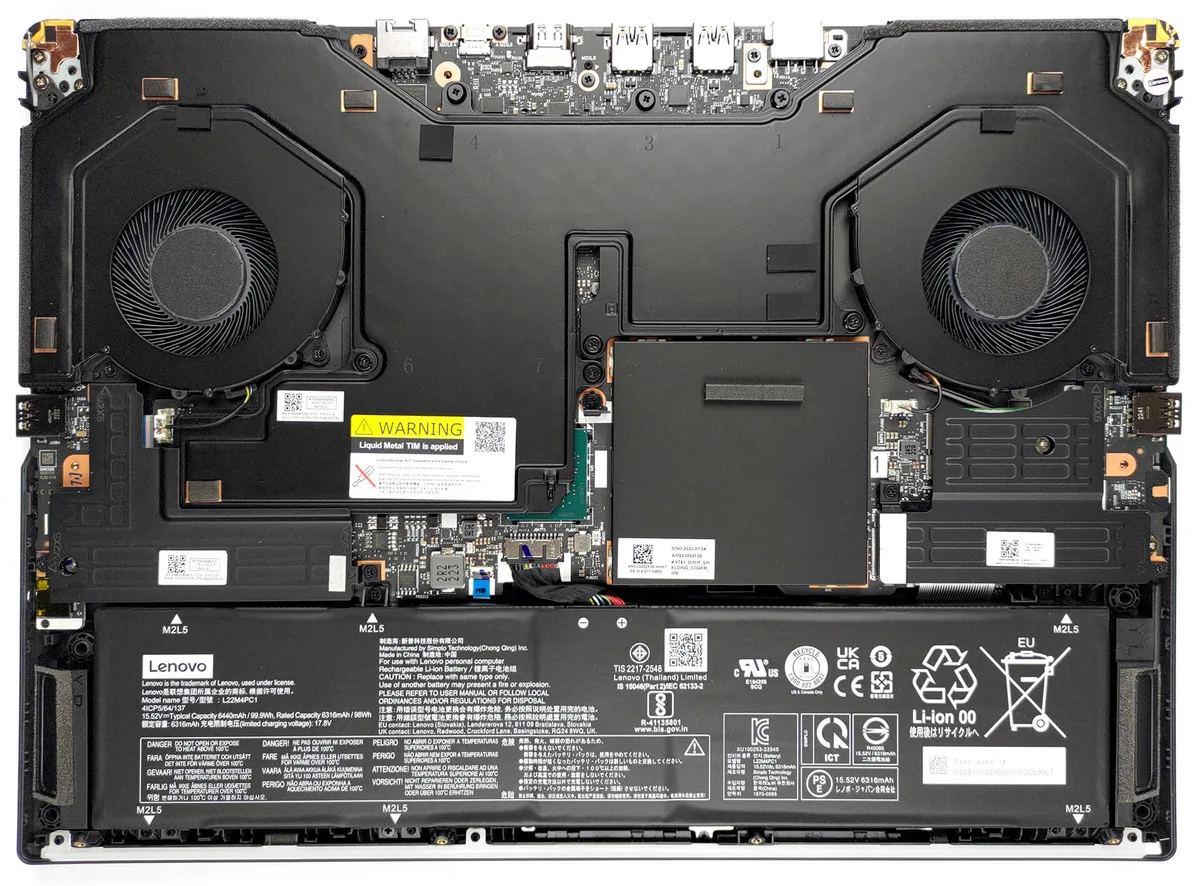
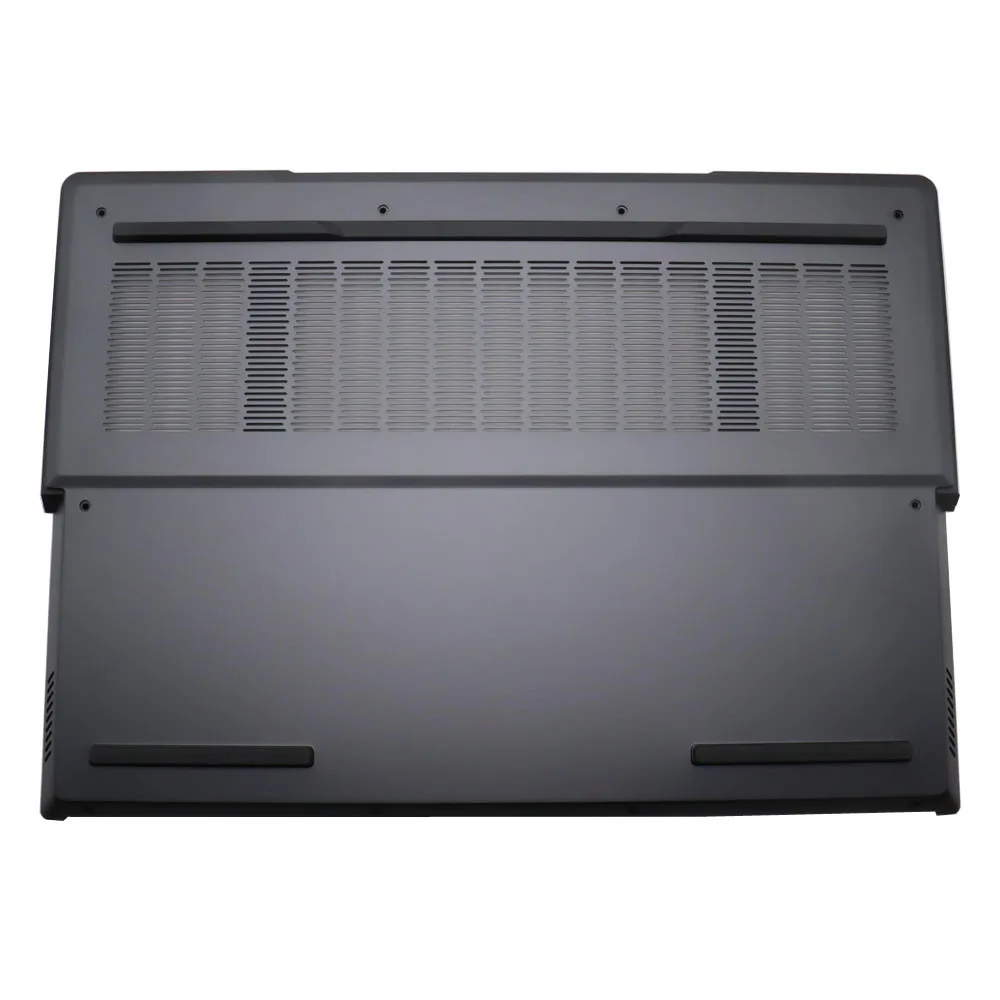
The Legion Pro 7 chassis is not a uniform rectangle. Its rear housing protrudes significantly from the main footprint of the bottom cover. Understanding this layout is essential before purchasing any external support device.
When you flip the machine over, you will see a complex intake pattern designed for high-volume airflow. You must map these intake zones to ensure your stand's support arms do not block them. If your stand obscures these grilles, you negate the cooling benefits of lifting the laptop in the first place.
Check the official Lenovo Product Specifications Reference to verify your model's exact chassis depth. Using these dimensions helps you identify which stands offer enough shelf space to accommodate the protrusion. You want a design that supports the main body while leaving the rear hanging free.
Why Most X-Frame Stands Block Your Cooling
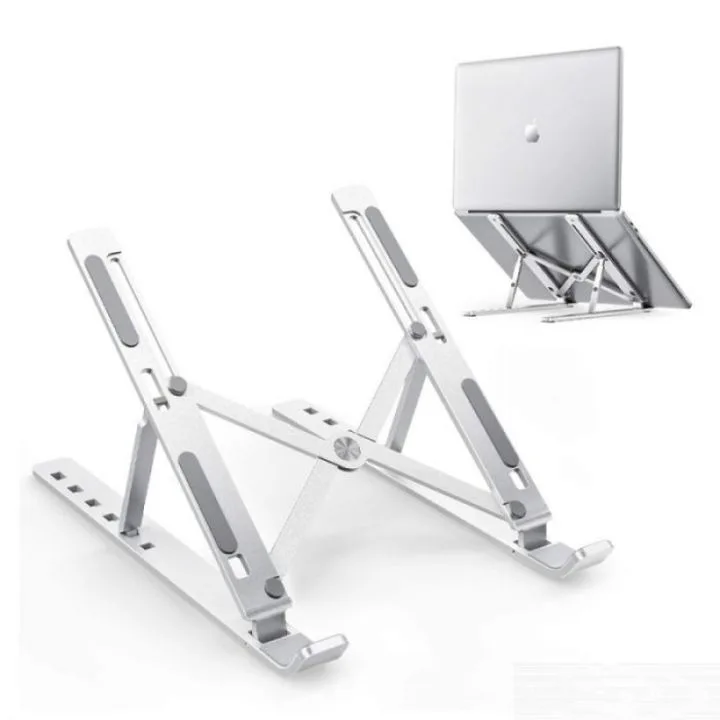
X-frame stands are popular because they fold away for travel, but they are rarely ideal for this specific laptop. The central pivot point of these stands usually sits exactly where the Legion’s deepest intake grilles are located.
When you extend these stands to gain height, the arms often migrate toward the center of the chassis. This movement frequently forces the arms to overlap with the primary fan intakes. You might gain height, but you pay for it with reduced thermal headroom and higher component temperatures.
If you must use a folding stand, look for models with adjustable width settings. This allows you to slide the support arms outward, bypassing the intake grilles entirely. Always verify that the arms are wide enough to clear the rubber feet of the laptop, as the Legion's feet are positioned to provide maximum stability on flat surfaces.
Key Design Features to Look For
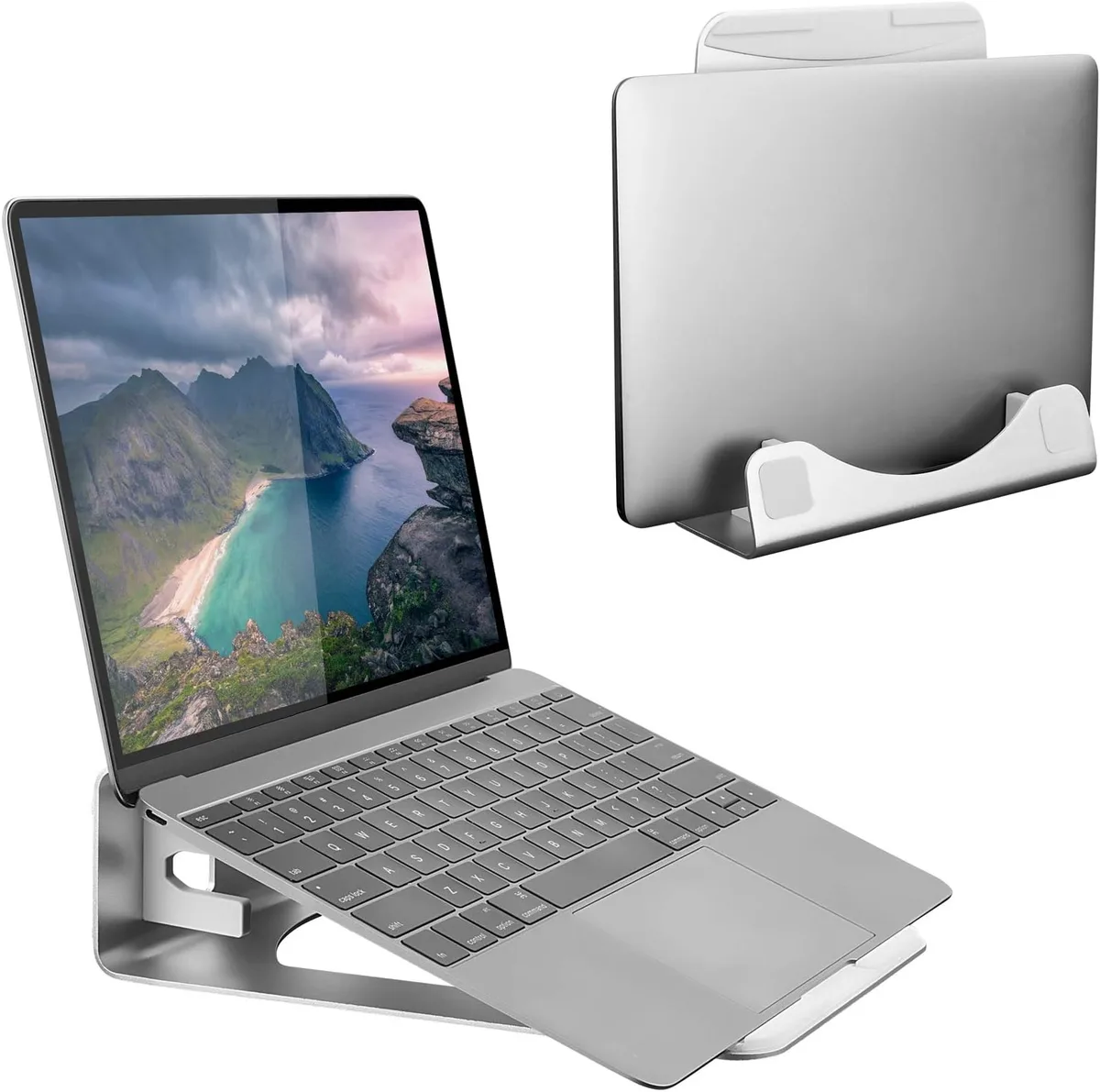
Focus on U or L shaped designs that lack a rear connecting brace. These models connect the two side arms via a front-only or middle-only structure, which ensures the rear of your Legion remains completely clear.
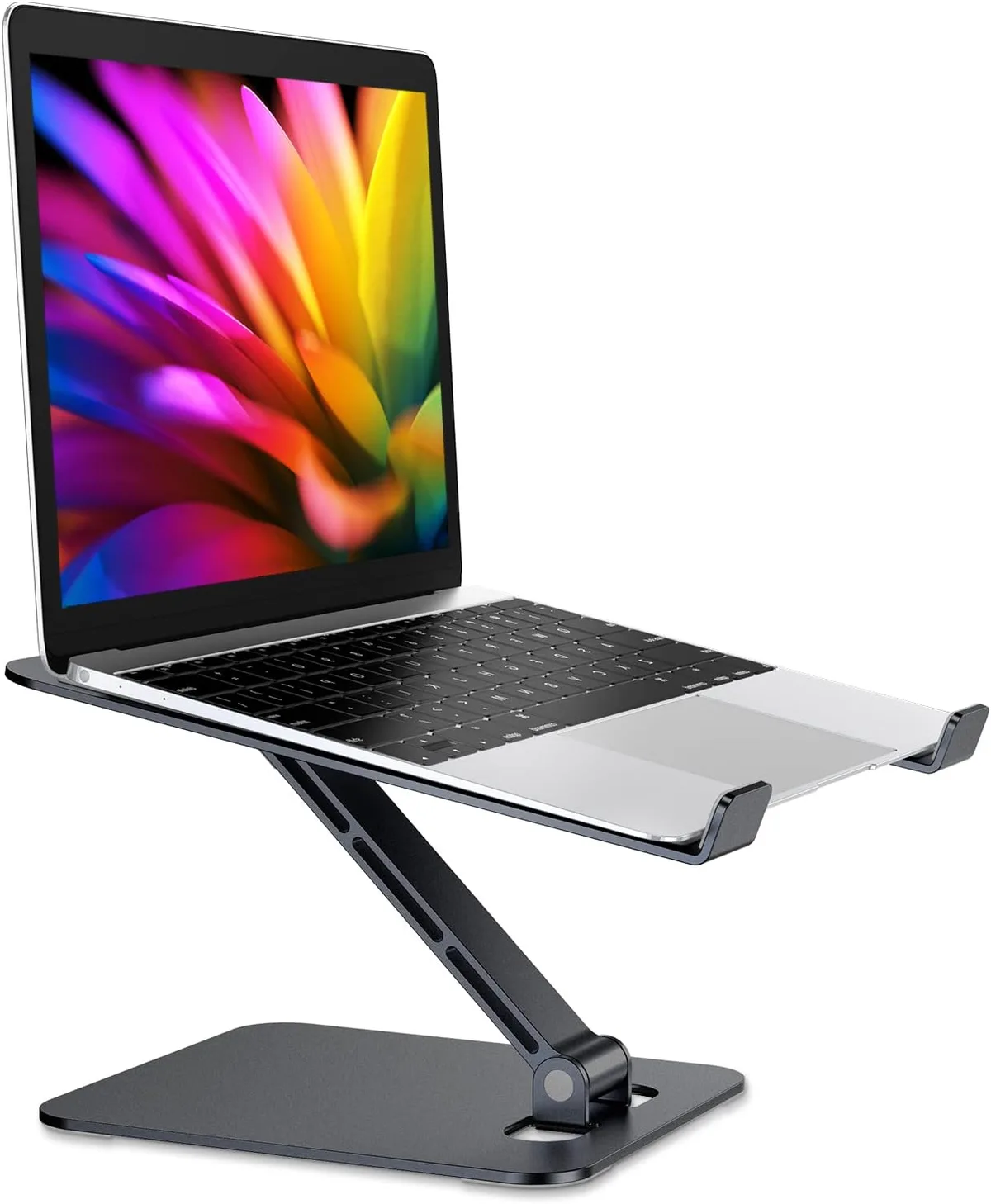
Look for stands with deep, rubberized front hooks that accommodate the thickness of a gaming chassis. Gaming laptops are significantly thicker than office-grade devices, and a shallow hook will let the front edge of the machine slide off.
Design Checklist
- Arm Width: Must be adjustable to avoid intake grilles.
- Hook Depth: Minimum 20mm depth recommended for secure grip.
- Material: Reinforced aluminum or steel to prevent chassis flex.
- Open Rear: Zero crossbars connecting the back two support points.
Comparing Stand Styles for Rear-Exhaust Laptops
Not all stands are built for the same purpose. Your choice should depend on whether you prioritize portability or a permanent, rigid desktop setup.
| Stand Style | Best Use Case | Clearance Performance |
|---|---|---|
| Fixed Risers | Permanent Desktop | Excellent; best structural support. |
| Adjustable U Stands | Versatile Angles | Very Good; keeps ports clear. |
| Folding X-Stands | Travel/Occasional | Poor; often blocks rear exhausts. |
| Active Cooling Pads | Maximum Airflow | Variable; requires grille mapping. |
Fixed riser stands are usually the most reliable option for the Legion Pro 7. They provide a stable, solid base that doesn't rely on hinges or thin metal strips. While they don't fold down, they ensure that the heavy gaming chassis remains perfectly still during intense play sessions.
Step-by-Step: How to Measure for Perfect Port Clearance
Precision is your best friend when dealing with a high-performance chassis. Before you buy, pull out a tape measure and check your laptop’s specific footprint.
Measure the distance from the rear hinge to the furthest point of the exhaust hump. This value tells you exactly how much clearance your stand must provide. If you have cables plugged into those rear ports, add another 30mm to that measurement to account for the bend radius of your power and display cords.
Next, measure the width of your laptop’s rubber feet. A stand’s support arms should ideally rest between these feet or directly under them to ensure stability. If the arms fall on the intake grilles, you create a potential heat trap.
The Cooling Pad Paradox: Airflow vs. Obstruction
Many players assume more fans equal better cooling, but the Legion Pro 7 demands strategic air delivery. If you use a cooling pad, ensure the pad’s fan placement matches your laptop’s intake pattern exactly.
Generic pads with a central fan layout are often counterproductive. They might blow air against the solid base of your laptop rather than into the intake vents. This creates air turbulence that can actually push heat back into the internal components.
For the best results, prioritize static risers that provide an open-air environment. Elevating the chassis by 3 to 4 inches allows the internal fans to draw cool air from below without interference. This method relies on the superior thermal management designed by the manufacturer, rather than external, potentially mismatched, hardware.
Mistakes to Avoid When Choosing a Stand
Avoid the common trap of prioritizing portability over structural support. Lightweight, flimsy metal stands often bend under the weight of the Legion’s internal cooling systems and dense components.
Don’t overlook the importance of cable management either. If a stand is too narrow, you might find your display cables getting pinched against the surface of your desk. This tension can loosen the ports over time, leading to connection failures.
Finally, resist the urge to use universal stands that require you to stick adhesive mounts to the bottom of the laptop. These stickers often interfere with the ventilation pathways or trap heat against the bottom cover. Opt for a gravity-based or mechanical support that touches only the edges of the chassis.
Optimizing Your Thermal Intake Grilles
Keeping the intake grilles clean is just as important as choosing the right stand. If your stand is too low, you’ll find that dust accumulates much faster on the bottom filter mesh.
Routine maintenance involves checking these grilles for hair and dust build-up. We recommend a quick inspection every time you clean your desk area. If you notice the fans spinning at higher RPMs than usual for the same load, it’s a clear sign that airflow is restricted.
Ensure your desk surface is flat and free of deep rugs or fabric pads. These soft surfaces act as sponges that block air intake from underneath. A hard, solid surface combined with a high-clearance riser is the standard for long-term component health.
Pro Tips for Managing Heavy-Duty Gaming Chassis
A heavy laptop requires a stable center of gravity to prevent typing wobble. If your stand has adjustable joints, make sure they are tightened to the maximum setting before you place the device on them.
Use an external keyboard and mouse to prevent any keyboard flex or unwanted movement. Using the built-in keyboard on a stand is generally discouraged because it creates unnecessary strain on the device's hinge and the stand’s structure. Keep your inputs separate from your display support for the best experience.
If you travel often, look for stands that use interlocking modular parts. This allows you to break the stand into smaller, flat pieces for easier transport. Always verify that the connection points are reinforced, as wear and tear on these joints is the leading cause of early stand failure.
Final Decision Guide: Matching Your Needs to the Right Design
Selecting a stand for your Legion Pro 7 requires a final assessment of your primary environment. If you work in a fixed office, a heavy-duty, fixed-height riser is almost always the superior choice. These provide a stable foundation that removes any risk of the laptop sliding or vibrating during intensive use.
If you rotate between multiple spaces, look for portable stands that maintain the U-frame design. You lose some sheer weight capacity, but you gain the ability to replicate your ergonomic setup anywhere. Always prioritize rigid joints and metal construction over plastic, as gaming hardware generates localized heat that can cause cheaper materials to warp over time.
Before finalizing your decision, verify the stand’s width one last time. If the support arms are fixed in place, check them against your laptop’s rubber feet layout. The goal is a fit that provides rock-solid stability without impeding the chassis intake grilles or rear ports.
Frequently Asked Questions
Is it necessary to match the stand brand to the laptop brand?
No, brand alignment is irrelevant for laptop stands. Manufacturer documentation for the Legion Pro 7 does not require specific external accessories for thermal safety. Focus entirely on the physical dimensions and mechanical design of the stand instead of the logo printed on the packaging.
Can I place my laptop on a stand while it is connected to a docking station?
Yes, this is an excellent way to maintain a clean desk. Just ensure that the cables connecting your dock to the laptop have enough slack to accommodate the height of the stand. If the cables are too short, they will create tension that can damage your USB-C or Thunderbolt ports over time.
Does the stand material affect heat dissipation?
Yes, aluminum is the gold standard for stands because it acts as a passive heat sink. It conducts heat away from the bottom of the chassis and radiates it into the air. Plastic stands lack this thermal conductivity, which makes them less effective at helping your laptop stay cool during high-load tasks.
What should I do if the stand makes the laptop wobble?
A wobbly stand usually indicates that the support arms are not perfectly level or the desk surface is uneven. First, check if all four rubber feet on the stand’s base are in contact with the desk. If the wobble originates from the laptop itself, adjust the position of the device to better center its weight on the arms.
Can a laptop stand damage the screen hinge?
A stand that is adjusted to an extreme angle can put extra strain on your screen hinge if you leave the laptop lid closed or angled poorly. Always ensure the screen is supported properly by the laptop’s own hinges. Avoid applying downward pressure on the screen assembly while the device is perched on a riser.

Similar Posts